
Satisfies 1 requirement
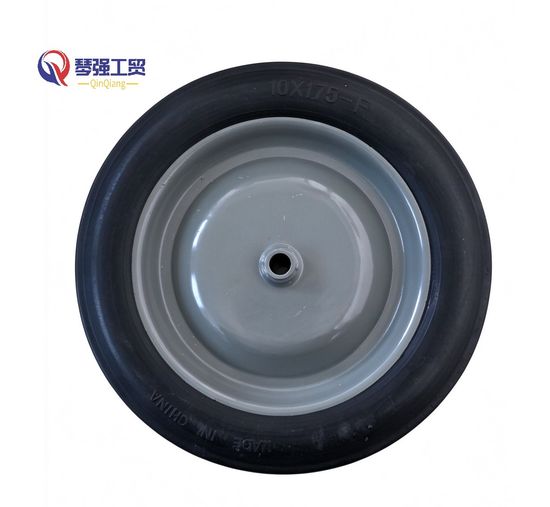
Sturdy Structure 157mm Total Height Solid Rubber 5 Inch Hand Cart Platform Trolley Wheels
US$1.50-2.46
100 Pieces(MOQ)

I have found results from100000+products and60000+suppliers aboutWheel for hand trolley and carts




Selecting the correct material is critical for durability. For indoor warehouse floors, Polyurethane (PU) wheels are ideal as they are non-marking and offer floor protection. For outdoor or uneven terrain, Pneumatic (air-filled) rubber wheels provide superior shock absorption. In chemical or food processing plants, Nylon or Polypropylene wheels are preferred due to their high resistance to oils, acids, and moisture.
Always calculate the Dynamic Load Capacity rather than just the static weight. A professional safety margin formula is: (Total Weight of Cart + Max Load) / 3. We divide by 3 instead of 4 because, on uneven surfaces, the load is often distributed across only three wheels. Ensure the bearing type (e.g., precision ball bearings for heavy loads vs. sleeve bearings for light loads) matches the intended weight class.
Buyers should verify that products meet ISO 22883/22884 standards for casters and wheels. For the North American market, check for ANSI/ICWM performance standards. Key technical metrics include Durometer (Hardness)—typically Shore A for rubber/PU and Shore D for hard plastics—and Rolling Resistance tests to ensure ergonomic efficiency for operators.
Focus on the bracket thickness and finish; heavy-duty trolleys require zinc-plated or stainless steel frames to prevent corrosion. Request Salt Spray Test reports if the wheels will be used in humid or coastal environments. Additionally, check the swivel head mechanism—double ball race swivels offer much smoother maneuverability under heavy loads than single race designs.
The primary risk is material substitution, where a supplier uses recycled plastic instead of virgin polymers, leading to premature cracking. To mitigate this, use Made-in-China.com's Secured Trading services and request a Pre-shipment Inspection (PSI) to verify material hardness and load-bearing integrity before the balance payment is made.
Focus on Tiered Pricing and Tooling Costs. If you require a custom tread pattern or hub size, negotiate for the mold fee to be refunded once a certain order volume (e.g., 5,000 units) is reached. Always clarify the Incoterms; for heavy items like wheels, FOB (Free On Board) is usually more cost-effective for buyers who have their own freight forwarders to manage sea freight.
Wheels are heavy and high-density, making them prone to pallet collapse if not packed correctly. Insist on heavy-duty corrugated cartons reinforced with plastic strapping and palletization with stretch wrap. Ensure the supplier provides a detailed packing list that specifies the net weight and gross weight per carton to avoid customs delays or surcharges at the destination port.
Be aware of Anti-Dumping Duties (ADD) that some regions (like the EU or USA) may apply to specific steel or rubber products from certain origins. Check your local Harmonized System (HS) Code (typically under Chapter 8716 or 8302) to confirm the current tariff rates. Sourcing through verified premium suppliers on Made-in-China.com can help ensure you receive the correct Certificate of Origin to benefit from applicable trade agreements.