
Satisfies 1 requirement
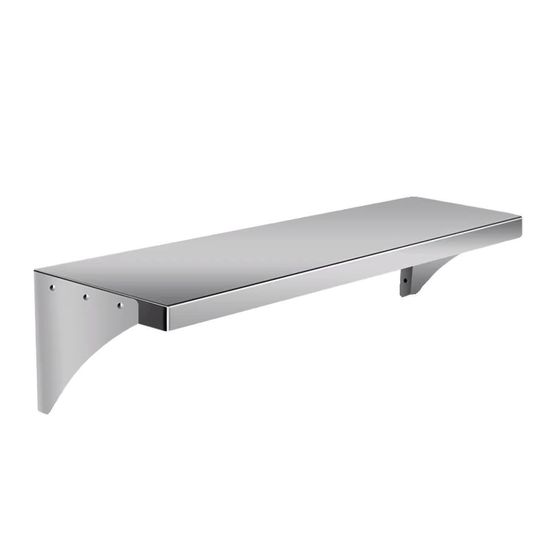
Bathroom Accessories Stainless Steel Wall Mouted Glass Shelf
US$9.00-11.00
10 Pieces(MOQ)

I have found results from80000+products and20000+suppliers aboutStainless steel wall shelf




The choice of material is critical for durability and hygiene. For commercial kitchens or medical environments, prioritize Grade 304 stainless steel due to its excellent corrosion resistance and food-safety properties. For dry storage or less demanding environments, Grade 201 is a more cost-effective alternative, though it is more susceptible to rust in high-moisture areas. Always verify the nickel and chromium content through material test reports (MTRs).
Ensure the shelf thickness is at least 18-gauge (1.2mm) or 16-gauge (1.5mm) for heavy-duty applications. The mounting brackets are the primary failure point; look for heavy-duty support gussets and reinforced mounting holes. A standard professional shelf should support at least 200-300 lbs when properly installed into wall studs. Always request the maximum static load capacity data from the supplier.
A #4 Brushed Finish is the industry standard as it hides scratches and fingerprints effectively. For safety, ensure the shelf features hemmed edges (folded under) or bullnose fronts to prevent injuries from sharp metal. In food service, look for NSF Certification (National Sanitation Foundation), which guarantees the design has no 'dead corners' where bacteria can accumulate, making it easy to sanitize.
High-quality shelves utilize full TIG welding rather than spot welding at critical stress points. Check for smooth, polished weld joints that are free of discoloration or burrs. For modularity, consider adjustable bracket systems that allow for height flexibility, but ensure the locking mechanism is vibration-resistant.
Stainless steel shelves are prone to denting and bending during transit. Insist on 5-layer corrugated cardboard packaging with internal foam corner protectors and wooden crates for LCL (Less than Container Load) shipments. To reduce 'volumetric weight' costs, source knock-down (KD) designs that can be flat-packed, which significantly lowers shipping expenses compared to fully welded units.
Always conduct transactions through secure payment escrow services provided by reputable platforms like Made-in-China.com. Utilize their STS (Secured Trading Service) to ensure funds are only released after you confirm receipt and quality. Before placing a bulk order, hire a third-party inspection agency (like SGS or Intertek) to perform a Pre-Shipment Inspection (PSI) to verify material grade and quantity.
Be aware that some countries impose anti-dumping duties on stainless steel products from specific regions. Check your local Harmonized System (HS) Code (typically 7323.93 or 9403.20) against current trade tariffs. Ensure the supplier provides a Certificate of Origin and a detailed Commercial Invoice to facilitate smooth customs clearance and avoid unexpected 'demurrage' fees at the port.
Since stainless steel is a commodity, prices fluctuate with raw material market rates. Negotiate based on a transparent cost-plus model. For long-term partnerships, ask for volume-based rebates or a fixed price agreement for a 6-month period to stabilize your supply chain costs. Always clarify if the quoted price includes FOB (Free On Board) terms to avoid hidden local handling charges.