
Satisfies 1 requirement
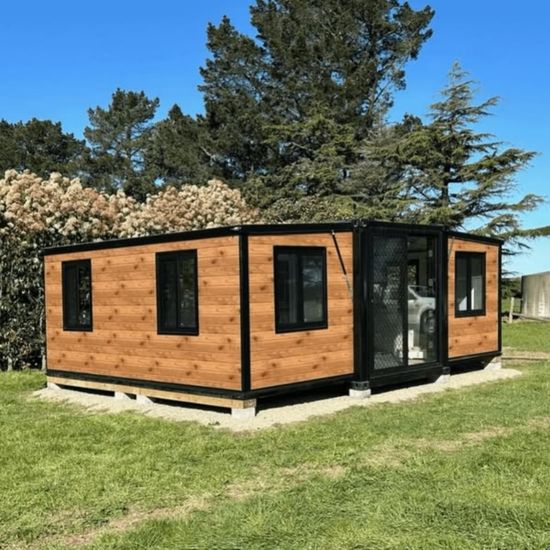
Ready to Living 2 Bedrooms Prefabricated Modular Expandable Container Home/ Prefab Home
US$5,400.00-5,500.00
1 Set(MOQ)

I have found results from200000+products and60000+suppliers aboutPrefab container




Buyers must prioritize the structural integrity and insulation properties. Ensure the main frame uses galvanized steel with a thickness of at least 2.5mm to 3.0mm to prevent corrosion. For wall panels, Rockwool or PU (Polyurethane) sandwich panels are recommended for superior fire resistance (Class A) and thermal insulation. Additionally, verify that the floor system uses fiber cement boards or MGO boards with a minimum load-bearing capacity of 250kg/m².
It is critical to verify that the supplier adheres to ISO 9001 for quality management and ISO 14001 for environmental standards. For specific markets, ensure the electrical components are CE certified (Europe) or UL listed (USA). If the container is intended for modular housing, request wind resistance ratings (typically up to Grade 11) and seismic fortification levels (usually Grade 8) to ensure safety in extreme weather conditions.
Top-tier suppliers on Made-in-China.com should provide BIM or CAD design support to allow for modular expansion. Check if they offer pre-installed plumbing and electrical systems (Plug-and-Play) to reduce on-site labor costs. Furthermore, evaluate their ability to provide customized exterior cladding and interior finishes to match specific brand aesthetics or local architectural requirements.
A high-quality prefab container should have a design lifespan of 15 to 25 years. Maintenance is relatively low, but buyers should ensure the anti-corrosive coating is intact. We recommend a bi-annual inspection of the roof drainage system and sealants around windows and doors to prevent water ingress, which is the primary cause of structural degradation.
Utilize Secured Trading Services provided by Made-in-China.com to ensure payment safety. Always conduct a pre-shipment inspection (PSI) through third-party agencies like SGS or Intertek to verify that the dimensions, material density, and welding quality match the Proforma Invoice. Never release the final balance until you receive a video walkthrough of the finished units or a verified inspection report.
For 'Flat-pack' containers, you can fit 4 units in a standard 40HC (High Cube) shipping container, which significantly reduces ocean freight costs. If purchasing 'Detachable' types, the components are packed densely, allowing for even more units per shipment. Ensure the supplier provides a detailed packing list and loading photos to prevent damage during transit and to facilitate customs clearance at the destination port.
Focus on the Total Cost of Ownership (TCO) rather than just the unit price. Negotiate for spare parts kits (extra sealants, bolts, and touch-up paint) to be included at no cost. For orders exceeding 10 units, aim for a 5-10% volume discount or request an upgrade in insulation thickness for the same price. Establish a staged payment structure (e.g., 30% deposit, 70% against BL copy) to maintain leverage.