
Satisfies 1 requirement
Innovative China Fiberglass Mobile Kitchen with Multi-Cooking Features
US$4,000.00-6,000.00
1 Piece(MOQ)

I have found results from100000+products and30000+suppliers aboutMobile container kitchen


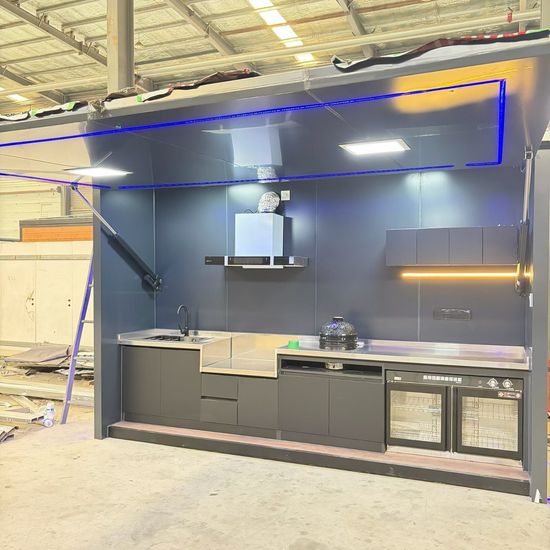
When sourcing a mobile container kitchen, you must prioritize structural integrity and material safety. Ensure the main frame uses galvanized steel to prevent rust, especially for coastal or humid environments. The interior walls should be made of 304 stainless steel or food-grade aluminum-plastic panels for easy cleaning and fire resistance. For flooring, non-slip aluminum checkered plate is the industry standard to ensure worker safety. Additionally, verify that the electrical system (voltage, sockets, and circuit breakers) is customized to your target country's standards (e.g., 110V for US, 220V for EU) to avoid costly retrofitting.
Compliance is the most critical barrier in cross-border procurement. You should require the supplier to provide CE certification for the European market or ensure the unit is built to DOT/ASME standards for North America. Specifically for food service, the plumbing system must include high-capacity fresh and waste water tanks with a certified water pump and heater. Ask the supplier if they can provide NSF-certified kitchen equipment (sinks, hoods, and prep tables), as this is often a mandatory requirement for local health department permits.
Efficiency depends on the 'Work Triangle' layout, which optimizes the flow between storage, preparation, and cooking. For B2B buyers, it is recommended to choose a design with integrated high-efficiency exhaust hoods and fire suppression systems. If the kitchen is for high-volume output, ensure the chassis and axle capacity (e.g., dual axles for units over 4 meters) can support the weight of heavy industrial appliances like deep fryers and griddles. Customizable window configurations (hydraulic or manual) are also vital for customer interaction and ventilation.
The main risks include structural damage during transit and high ocean freight costs due to the large volume. To mitigate this, use Flat Rack or Open Top containers if the unit exceeds standard dimensions, or ensure the unit is ISO-standard sized to fit into a regular 20ft or 40ft shipping slot. Always insist on Professional Export Packaging, including corner protectors and vacuum-sealed wrapping for internal appliances to prevent salt-air corrosion. We strongly recommend purchasing All-Risk Marine Insurance to cover potential structural shifts during loading.
When negotiating on Made-in-China.com, do not just focus on the lowest price; focus on the detailed Bill of Materials (BOM). Request a pre-shipment video inspection or hire a third-party inspection service (like SGS or Intertek) to verify the electrical load test and water leakage test before final payment. Negotiate a staged payment plan (e.g., 30% deposit, 70% after inspection but before shipping) to maintain leverage. For long-term partnerships, ask for a 1-2 year warranty on the main structure and the inclusion of critical spare parts (like door seals and LED drivers) in the initial shipment.
Mobile kitchens are often classified under HS Code 8716 (Trailers and semi-trailers) or 9406 (Prefabricated buildings). You must confirm the import duty rates and whether a VIN (Vehicle Identification Number) is required for road registration in your country. If the kitchen includes gas appliances, ensure they have local gas safety certifications (like CSA or UL), as customs may seize units that do not meet local fire codes. For shipping, Roll-on/Roll-off (RoRo) is often the safest method for fully assembled mobile kitchens to prevent lifting damage.