
Satisfies 1 requirement
All Kind of Tankers Liquid Fuel Bulk Cement LNG LPG Powder Diesel Tank Cargo Container Transport Utility Heavy Duty Tractor Dumping Ships Truck Semi Trailer
US$60,000.00-80,000.00
1 Piece(MOQ)

I have found results from200000+products and70000+suppliers aboutDumping trailer


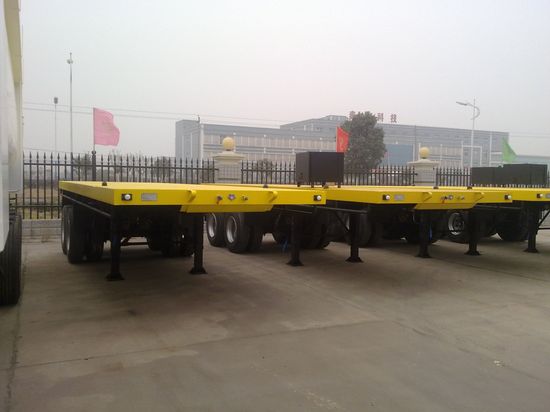


When evaluating a dumping trailer, prioritize the Load Capacity (Payload) and GVWR (Gross Vehicle Weight Rating) to ensure it meets your hauling needs. Look for high-tensile steel construction (such as Q345B) for the chassis and body to ensure durability. The hydraulic lifting system is critical; prefer telescopic cylinders or dual-piston hoists from reputable brands for smooth operation. Additionally, verify the axle brand and capacity (e.g., BPW or FUWA) and the braking system type (dual-line pneumatic or ABS) to ensure safety during heavy-duty transport.
Compliance is non-negotiable for cross-border procurement. Ensure the manufacturer provides ISO 9001 certification for quality management. For specific markets, check for CE marking (Europe), DOT compliance (USA), or ADR standards if transporting hazardous materials. It is essential to verify that the lighting and reflective marking systems meet the destination country's road safety laws. Always request a Certificate of Conformity (CoC) or Third-Party Inspection Report (such as SGS or BV) before final dispatch.
For construction and mining, prioritize reinforced side walls and wear-resistant floor plates (Hardox steel is ideal) to handle abrasive rocks and debris. For agricultural use, a lightweight aluminum alloy body can increase payload efficiency for grain or fertilizer. Consider functional features like automatic tailgate release mechanisms, wireless remote control for hydraulics, and heavy-duty tarp systems to prevent cargo spillage and improve operational efficiency.
Calculate the Total Cost of Ownership (TCO), which includes the purchase price, shipping freight, import duties, and maintenance costs. While a lower initial price is tempting, trailers with premium hydraulic seals and powder-coated finishes offer better corrosion resistance, reducing long-term repair costs. Evaluate the availability of spare parts (like seals, valves, and brake pads) in your local market to minimize downtime.
The primary risks include specification mismatch, where the delivered trailer does not meet local road dimensions or coupling standards, and shipping damage due to improper seafreight lashing. To mitigate these, use Made-in-China.com's Secured Trading services and insist on a pre-shipment inspection. Ensure the contract specifies the Kingpin size (2" or 3.5") and fifth-wheel height to guarantee compatibility with your existing tractor trucks.
Focus on volume-based pricing; even a small fleet order (3-5 units) can often trigger a 5-10% discount. Negotiate for extended warranties on the hydraulic system and main beam (ideally 1-2 years). Ask the supplier to include a 'wear-parts kit' (filters, seals, and light bulbs) for free as part of the deal. For long-term partnerships, discuss exclusive dealership rights if you have a strong local distribution network.
Dumping trailers are typically shipped via Ro-Ro (Roll-on/Roll-off) ships to prevent salt-spray exposure and mechanical damage, or Bulk Cargo carriers for larger dimensions. For cost-saving, some suppliers offer SKD (Semi-Knocked Down) shipping in containers, where the trailer is partially disassembled to fit; however, this requires professional assembly capabilities at the destination. Always ensure the supplier applies anti-corrosive wax coating before sea transit.
Always use Incoterms 2020 (such as FOB or CIF) to clearly define the point of risk transfer. Utilize Letters of Credit (L/C) or Escrow services provided by Made-in-China.com to ensure payment is only released upon proof of shipment (Bill of Lading). Stay updated on anti-dumping duties or environmental tariffs (like CBAM in the EU) that may apply to steel products from specific regions to avoid unexpected costs at customs.