
Satisfies 1 requirement
Guaranteed Quality Unique Cheap Used Tent Awning Car Roof
US$115.00-160.00
10 Pieces(MOQ)

I have found results from30000+products and9000+suppliers aboutCar awning


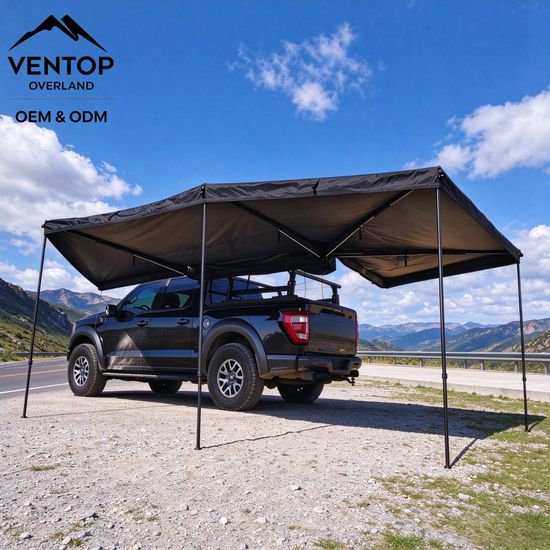


Selecting a car awning requires matching the mounting system to your vehicle's roof rack or crossbars. For SUVs and Off-road vehicles, side-retractable or 270-degree batwing awnings are ideal for overland camping. For smaller sedans, lightweight suction-cup or tension-pole awnings are more appropriate. Consider the fabric density (measured in GSM); high-quality awnings should use 280G-420G Polyester-Cotton Ripstop canvas with a PU coating of at least 2000mm-3000mm water column rating to ensure waterproof performance and UV protection (UPF 50+).
Buyers must prioritize structural integrity and material safety. Ensure the support poles are made of anodized aluminum alloy to prevent rust and provide high wind resistance. Check for SGS or TUV certifications regarding load-bearing and wind-tunnel testing. For the North American market, ensure compliance with CPAI-84 flammability standards. Additionally, verify that the outer storage bag is made of heavy-duty 1000D PVC to protect the awning from debris and UV degradation during high-speed travel.
Request a salt spray test report for all metal components to ensure longevity in coastal environments. Evaluate the seam sealing technology; premium suppliers use heat-taped seams rather than just stitching. Ask for the wind rating—a professional-grade awning should withstand Beaufort Scale 6 (25-31 mph) when properly staked. For bulk orders, it is highly recommended to use third-party inspection services to verify the stitching density (SPI) and the smoothness of the telescopic pole locking mechanisms.
Most professional manufacturers on Made-in-China.com offer OEM/ODM services. This includes custom logo printing (silk screen or heat transfer), custom fabric colors, and the addition of integrated LED lighting strips with USB or 12V power connectors. Furthermore, check for modular compatibility, such as the ability to attach awning rooms, mesh walls, or floor extensions, which can significantly increase the average order value (AOV) for retailers.
The biggest risk is shipping damage and oversized cargo surcharges. Car awnings are long and fragile; ensure the supplier uses honeycomb cardboard packaging with internal foam bracing. To mitigate transaction risks, utilize Secure Payment services on Made-in-China.com to ensure funds are only released after the goods pass inspection. Always verify the supplier's factory audit report to confirm they are a manufacturer and not a middleman, which ensures better control over lead times (typically 25-35 days for bulk).
Focus on the Total Cost of Ownership (TCO) rather than just the unit price. Negotiate for spare parts (e.g., extra pegs, ropes, and plastic joints) to be included at no cost, which reduces future after-sales overhead. For orders exceeding 100 units, aim for a 10-15% discount or request FOB (Free On Board) terms to maintain control over your international logistics costs. If you are a first-time buyer, suggest a staged payment (30% deposit / 70% after inspection) to balance the risk.
Car awnings are often classified under HS Code 6306.22 (Tents of synthetic fibers). Check the specific import tariffs for your country, as some regions impose anti-dumping duties on textile products. For shipping, LCL (Less than Container Load) is common for small batches, but be aware of 'long-length' surcharges from couriers like FedEx or UPS. For large-scale distribution, Sea Freight (FCL) is the most economical method. Ensure all documentation includes a Certificate of Origin to potentially benefit from Free Trade Agreements (FTA).