
Satisfies 1 requirement
Factory Price Blast Freezer Cabinet 60°C Energy-Saving Design with 1-Year Warranty Plug Play Automatic Motor Core Components
US$4,500.00-6,859.00
1 Piece(MOQ)

I have found results from50000+products and20000+suppliers aboutBlast freezers price


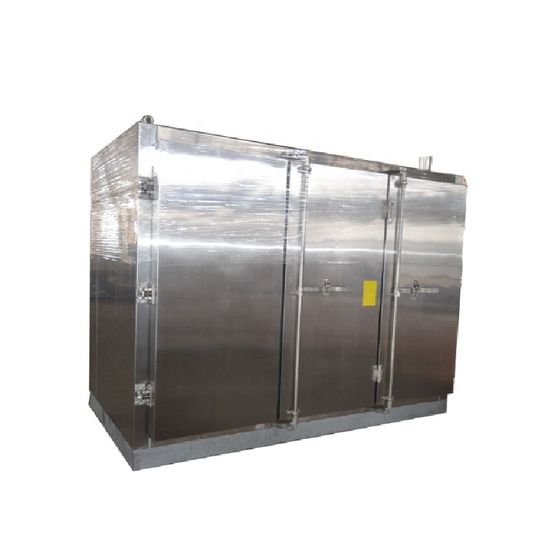


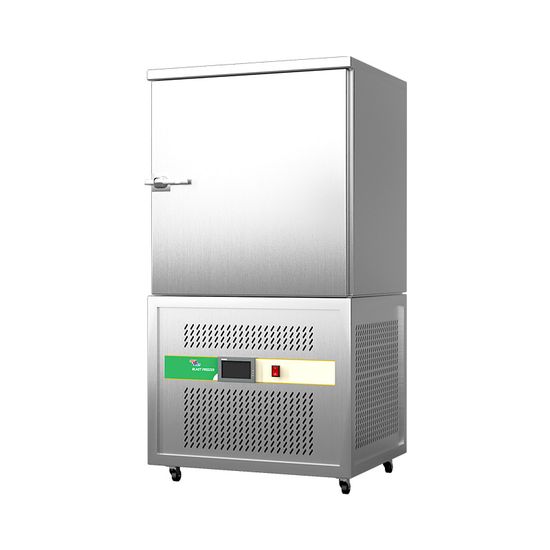


The price is primarily driven by the cooling capacity and the compressor brand (such as Bitzer, Copeland, or Danfoss). Key technical factors include the temperature pull-down rate (e.g., reducing core temperature from +70°C to -18°C within 90-240 minutes) and the insulation panel thickness, where 120mm to 150mm high-density polyurethane (PU) is standard for energy efficiency. Additionally, the use of food-grade SUS304 stainless steel for both interior and exterior surfaces significantly impacts the cost but ensures longevity and hygiene.
Air-cooled systems are generally more cost-effective and easier to install for small to medium units, whereas water-cooled systems offer higher efficiency for large-scale industrial blast freezers but require additional investment in cooling towers and piping. For specialized food processing, tunnel-type continuous blast freezers command a premium price compared to batch-type cabinet freezers due to their automated conveyor systems and higher throughput capabilities.
To ensure international market access and operational safety, buyers must verify CE certification for European markets or UL/NSF standards for North America. It is critical to confirm that the refrigerant used (such as R404A, R448A, or R290) complies with the buyer's local environmental regulations regarding Global Warming Potential (GWP). Furthermore, ensure the electrical configuration (voltage and frequency, e.g., 380V/50Hz/3P or 220V/60Hz/3P) matches the destination country's grid to avoid costly transformer retrofits.
Selection depends on the specific application: Commercial kitchens and bakeries usually require compact reach-in blast chillers for food safety compliance. In contrast, seafood and meat processing plants require walk-in blast freezers capable of reaching -35°C to -45°C to prevent ice crystal formation, thereby preserving the cellular structure and texture of the high-value protein.
Blast freezers are sensitive industrial instruments. Buyers should insist on seaworthy packaging, specifically vacuum-sealed plastic wrapping to prevent salt-air corrosion and reinforced wooden crate packing with shock-absorption bases. It is highly recommended to purchase All-Risk Marine Insurance and request the supplier to include tip-n-tell or shock sensors on the crates to monitor handling during transit.
Focus negotiations on the Total Cost of Ownership (TCO) rather than just the unit price. Ask for a breakdown of the spare parts package (e.g., extra door seals, controllers, and sensors) included in the quote. For bulk orders or project-based sourcing, negotiate for extended compressor warranties (e.g., 2-3 years) and request FAT (Factory Acceptance Test) video documentation before final payment to ensure the unit reaches the target temperature.
Utilize Secured Trading Services provided by Made-in-China.com to ensure payments are only released upon proof of shipment. Always conduct a third-party factory audit (such as SGS or Bureau Veritas) to verify the supplier's manufacturing capacity and quality control systems. Avoid paying via non-traceable methods; stick to Letter of Credit (L/C) for large industrial projects or Telegraphic Transfer (T/T) with a clear milestone-based payment schedule (e.g., 30% deposit, 70% against BL copy).
For large walk-in units, choose SKD (Semi-Knocked Down) shipping to save on freight costs, where panels are flat-packed. Ensure the supplier provides a detailed installation manual and wiring diagrams in English. For complex systems, negotiate for remote technical support via video link or check if the supplier has authorized local service partners in your country to handle the initial gas charging and commissioning.