
Satisfies 1 requirement
Advanced Lithium Ion Battery Laser Welding Machine for Customized Manufacturing
US$1,000,000.00-1,500,000.00
1 Set(MOQ)

I have found results from200000+products and80000+suppliers aboutBattery manufacturing machines


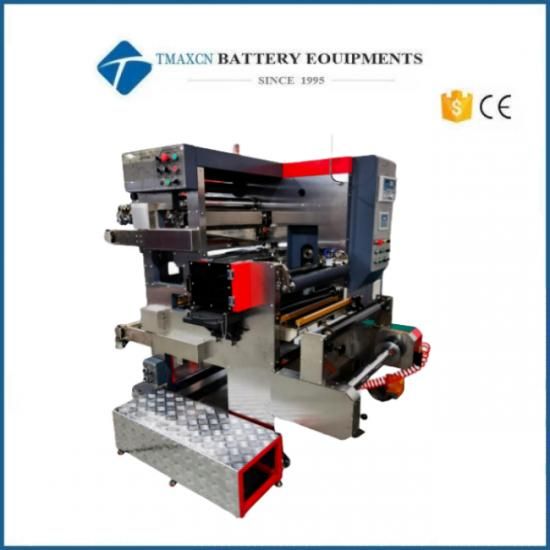


Selecting the correct machinery depends heavily on whether you are producing Lithium-ion (Li-ion), Lead-Acid, or Solid-State batteries. For Li-ion production, prioritize high-precision coating machines with a thickness tolerance of ≤±1.5μm and vacuum drying ovens that ensure moisture levels are below 100ppm. If your focus is on EV-grade batteries, ensure the equipment supports large-format cell assembly and features automated stacking or winding modules with high-speed tension control to prevent internal short circuits.
Buyers must verify that the equipment meets CE, UL, or CSA certifications for electrical safety. Key technical benchmarks include electrode coating speed (typically 50-100m/min), slitting precision, and electrolyte injection accuracy (±0.5%). For global trade, ensure the supplier complies with ISO 9001 for quality management and ISO 14001 for environmental standards, as battery manufacturing involves hazardous materials and requires strict explosion-proof designs in the mixing and electrolyte filling stages.
Assess the Integration Capability of the machines with Manufacturing Execution Systems (MES) to track real-time data and ensure traceability. High-end suppliers on Made-in-China.com offer fully automated turnkey solutions that reduce labor costs by up to 60%. Look for modular designs that allow you to scale production capacity from 10MWh to 1GWh by adding compatible units without replacing the entire line. Request a Cycle Time analysis to ensure the equipment meets your target PPM (Parts Per Minute).
Given the complexity of battery lines, prioritize suppliers offering Remote Diagnostic Systems and on-site installation/training. A professional supplier should provide a comprehensive spare parts package for the first 2 years of operation. Ensure the contract includes a guaranteed response time of <24 hours and check if the manufacturer provides regular software updates for the PLC (Programmable Logic Controller) systems to optimize performance over time.
The biggest risks include damage during maritime transit and non-compliance with local electrical codes. To mitigate this, insist on heavy-duty vacuum packaging and anti-rust coating for all precision components. Use Third-Party Inspection services (like SGS or Intertek) before the final payment to verify that the machine's Factory Acceptance Test (FAT) results match your requirements.
For high-value machinery, avoid 100% upfront payments. A standard industry practice is 30% deposit, 60% after successful FAT (Factory Acceptance Test), and 10% after installation/Site Acceptance Test (SAT). Utilize Secure Trading Services on Made-in-China.com to ensure your funds are protected until the supplier fulfills the shipping and documentation obligations.
Battery manufacturing machines often require Flat Rack or Open Top containers due to their dimensions. Negotiate Incoterms like CIF or DDP carefully; while CIF is common, DAP (Delivered at Place) may give you more control over the final unloading process. Ensure the supplier provides a detailed packing list and HS Code classification (typically under Chapter 84) to avoid delays at customs and ensure accurate tariff calculations.