
Satisfies 1 requirement
13 Gallon Trash Bags with Drawstring Plastic Garbage Bag China Manufacturer
US$0.01-0.10
1,000,000 Pieces(MOQ)

I have found results from2000+products and600+suppliers about13 gallon trash bags


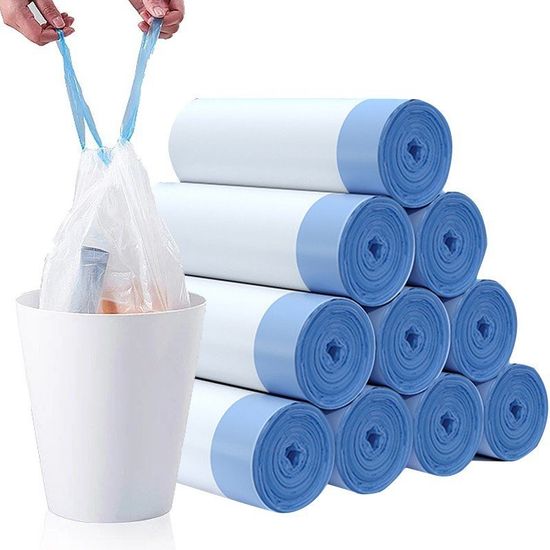


When evaluating 13 gallon (approx. 50 liters) trash bags, focus on Material Composition, Thickness (Gauge), and Closure Type. High-density polyethylene (HDPE) is thinner and cost-effective for paper waste, while linear low-density polyethylene (LLDPE) offers superior puncture and tear resistance for heavy or sharp kitchen waste. Ensure the thickness is at least 0.7 to 0.9 mil for standard household use, or 1.1 mil+ for heavy-duty applications. Additionally, verify the seam construction (star seal vs. flat seal) to ensure leak-proof performance.
Compliance is critical for cross-border trade. For the US market, ensure products are BPA-free and comply with ASTM D6400 if they are marketed as compostable. For the EU, look for EN 13432 certification. If you are sourcing recycled content bags, request Global Recycled Standard (GRS) certification to verify the percentage of post-consumer recycled (PCR) material. Always ask for Third-party Lab Test Reports (such as SGS or Intertek) covering tensile strength and load-bearing capacity.
The design should align with the end-user's environment. For Kitchen/Residential use, prioritize drawstring closures for hygiene and scent-masking technology or odor neutralizers. For Office/Commercial use, clear or black flap-tie bags in bulk rolls are more economical. If targeting the Eco-conscious segment, focus on biodegradable or plant-based materials (like cornstarch) and ensure the packaging is also plastic-free or made from recycled cardboard.
Calculate the Cost Per Bag rather than the cost per roll. Analyze the Total Cost of Ownership (TCO), including shipping volume; trash bags are heavy, so sea freight optimization is key. Seek suppliers on Made-in-China.com who offer tiered pricing—discounts of 10-20% are common for orders exceeding 50,000 units. Also, consider the packaging efficiency (e.g., coreless rolls) to reduce shipping volume and carbon footprint.
The primary risk is Quality Variance between the approved sample and the bulk order, specifically regarding film thickness and tensile strength. Another significant risk is Regulatory Changes, such as sudden plastic bans or 'Plastic Taxes' in certain countries. To mitigate this, use Trade Assurance services on Made-in-China.com and mandate a Pre-shipment Inspection (PSI) to verify the weight and count of the bags before the final payment is released.
Focus on Material Transparency. Ask for the current market price of raw PE resin to understand the supplier's margin. Negotiate based on Long-term Volume Commitments rather than a one-off purchase to secure better pricing. Request Customized Packaging (OEM) as part of the unit price to build your own brand equity. Always clarify Incoterms (e.g., FOB vs. DDP) early to avoid hidden logistics costs.
Since trash bags are dense and heavy, Full Container Load (FCL) shipping is the most cost-effective method. Ensure the supplier uses Heavy-duty Corrugated Master Cartons to prevent bursting during transit. For shipping to the US or Europe, ensure the supplier provides a Detailed Packing List and Country of Origin marking on every outer box to prevent customs delays or fines.